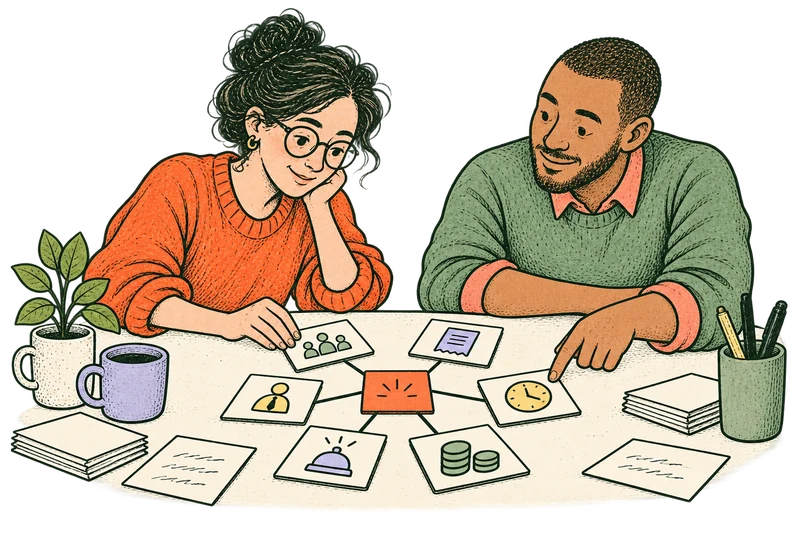
Growth can strain service. A delay can tie up cash. A cost-saving move can change what customers experience. The effects cross teams, systems and time.
The next question is what to do: which options are credible, what each depends on, and what evidence would make you reconsider.
One decision. Many connections.
01 / 05A number changedA measure moves. The signal matters, but it does not yet explain the cause or the best response.
Where the work gets difficult
Connect the pieces. Keep the reasoning.
The obstacle is often the gap between information, understanding and the next person who needs to act.
01 / Scattered information
The answer is in several places.
Reports hold figures. Documents explain exceptions. Teams remember what changed. Finding the relevant pieces—and checking their coverage—comes before a useful answer.
With OpscienBring supported sources together and explore their connections in the Knowledge Atlas.
02 / Shared meaning
The same label can hide a difference.
Revenue before returns or after? Per order or per customer? A comparison needs agreed definitions, units and periods, as well as a calculation someone can check.
With OpscienReview proposed definitions and inspect the sources and computed results behind an answer.
03 / The handoff
A headline loses what made it useful.
By the time a finding reaches a meeting, its assumptions and doubts can disappear. The next person needs the working, the limits and the unresolved question.
With OpscienKeep useful analysis in reports and applications, alongside the evidence for review.
There is rarely only one next move
Different choices. Different consequences.
A change in performance can lead to several responses. Compare what each might improve, what it could strain, and what you would need to know.
Weigh what changes.
What could we change?
Add capacity
More people, stock or equipment could relieve a bottleneck.
Check: demand, utilization and the added cost.
Adjust price or cost
A different price or cost base could improve the margin.
Check: customer response, volume and quality.
Change service or timing
A different offer, schedule or promise could rebalance the work.
Check: customer value and the effect on other teams.
Compare assumptionsReview the evidenceChoose what to test
Then watch what happens. New evidence may change the choice.
Why we are building Opscien
An analyst for the question. A workspace for the decision.
Investigate a change, compare a forecast or scenario, and bring the evidence to review. Assumptions remain visible; an authorized person decides what happens next.
Advanced simulations and outcome tracking are in development. A modeled result needs validation for its use; it does not establish what a business change will cause.